


Circle PET Acoustic Panel | 2x2 feet | Camel
Circle PET Acoustic Panel | 2x2 feet | Camel
27 reviews
Regular price
Rs. 3,695.00
Regular price
Rs. 3,695.00
Sale price
Unit price
/
per
Tax included.
Shipping calculated at check out.
Couldn't load pickup availability
- 30 day return & money back policy
- Tested & certified to ASTM, ISO and EN standards
- Safe packaging inclusive
About the Product
About the Product
Premium circular felt acoustic wall panels designed to absorb sound reflections while enhancing interior décor. Suitable for homes, offices, studios, meeting rooms, and commercial spaces. Tested as per ASTM C-423, the felt achieves an NRC of 0.30 at 9mm, 0.40 at 12mm, 0.50 at 18mm and 0.60 at 24mm.
Size & Dimensions
Size & Dimensions
Panel Size: 2x2 ft (600 × 600 mm).
Designed as a decorative Circle-shaped felt acoustic wall panel.
Installation Method
Installation Method
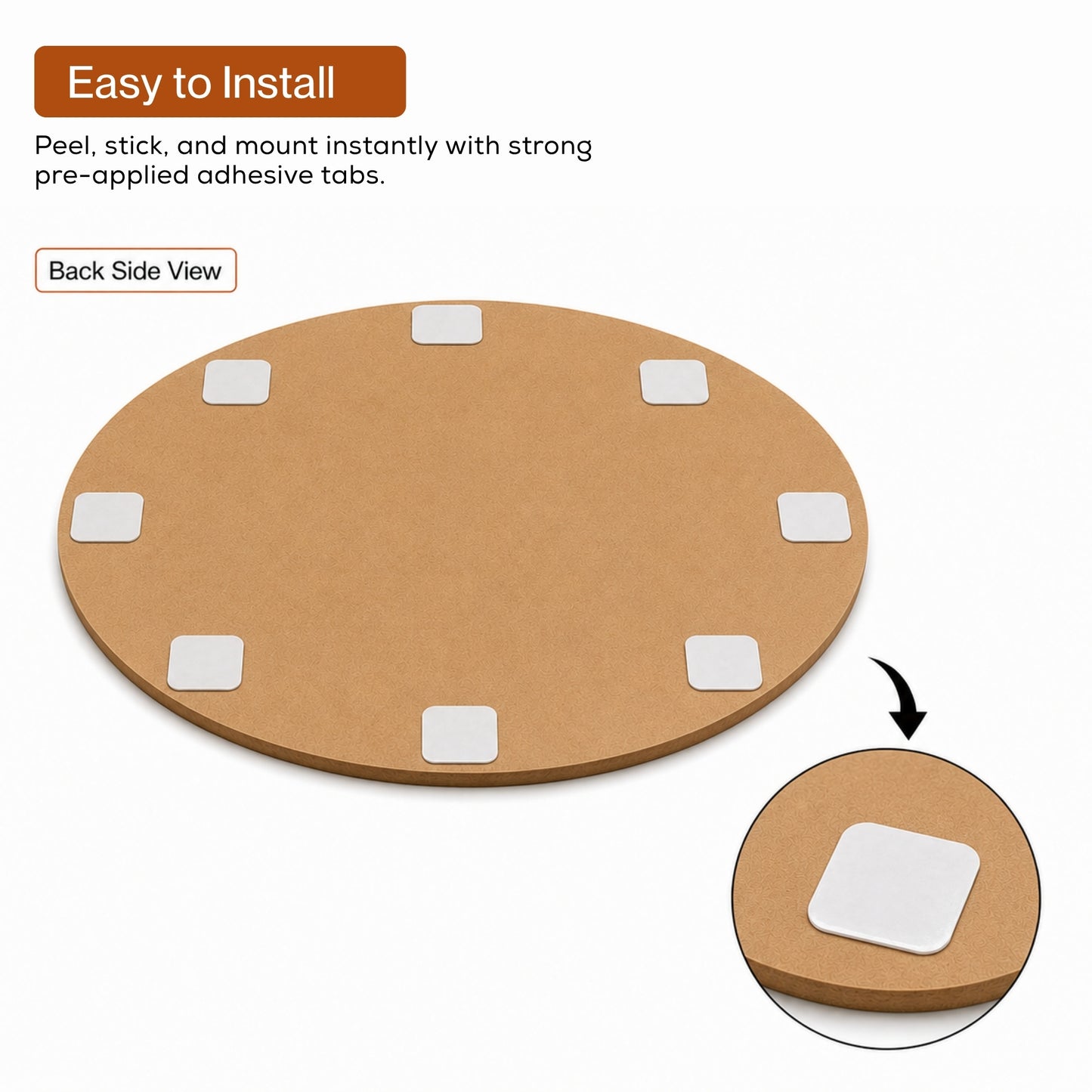
Install directly on a clean, dry wall using a suitable high-strength adhesive. Position carefully and press firmly for secure bonding.
Care Instructions
Care Instructions
Clean with a soft brush, dry microfiber cloth, or low-suction vacuum. Avoid water, harsh chemicals, and abrasive cleaners.Clean with a soft brush, dry microfiber cloth, or low-suction vacuum. Avoid water, harsh chemicals, and abrasive cleaners.
Warranty and Certification
Warranty and Certification
Manufactured by MMT Acoustix® using quality acoustic materials. Warranty and certification apply as per manufacturer terms.


J
James Cole The room had a noticeable echo, so I tried a partial treatment first before adding more panels. I was looking for a solution that could soften the acoustics without turning the studio into a technical-looking studio. The circle PET panels appealed to me because the treatment could become part of the interior rather than something I would want to hide. Before ordering, I spent time on the MMT Acoustix website comparing the use case, size and basic installation information. That helped set the right expectation: PET acoustic treatment is mainly about controlling reflections and reverberation inside the room, not creating a complete barrier against noise coming through walls, doors or windows. When the order arrived, the first thing I noticed was the consistency of the felt surface and the cut edges. I laid the pieces out on the floor before fixing anything so I could check spacing and alignment. That small step made the final installation look much more deliberate. I specifically chose Camel, and it looks balanced under normal room lighting. The 2x2 feet format worked well for my layout, although I would recommend calculating actual coverage rather than estimating quantity only from a photograph of the wall. For installation, I marked the layout first and checked the wall surface before choosing the fixing method. Adhesive felt more suitable for my permanent arrangement, while I would test any tape first on painted walls rather than assuming it will behave the same everywhere. The acoustic change was easiest to notice during speech. The room has less lingering energy after a sentence, calls feel clearer, and sharp reflections are reduced. It is not silence and it is not soundproofing, but it is the kind of improvement I was actually trying to achieve. Packaging on my order was protective and the panels reached in usable condition. I also appreciated being able to speak with someone for a practical placement question instead of relying only on generic marketplace descriptions. There were cheaper felt products available online, but I was more comfortable buying from a company focused on acoustics. Once I considered the finish, product information, packaging and support, the pricing felt competitive rather than simply expensive. If I were doing the room again, I would start by identifying the most reflective surfaces, treat a sensible area, listen to the change and then add more only if required. That approach gives a better result than covering every wall without a plan.
A
Aryan Puri We installed these in a meeting room where speech was bouncing off too many hard surfaces. I was looking for a solution that could soften the acoustics without turning the meeting room into a technical-looking studio. The circle PET panels appealed to me because the treatment could become part of the interior rather than something I would want to hide. Before ordering, I spent time on the MMT Acoustix website comparing the use case, size and basic installation information. That helped set the right expectation: PET acoustic treatment is mainly about controlling reflections and reverberation inside the room, not creating a complete barrier against noise coming through walls, doors or windows. When the order arrived, the first thing I noticed was the consistency of the felt surface and the cut edges. I laid the pieces out on the floor before fixing anything so I could check spacing and alignment. That small step made the final installation look much more deliberate. Colour consistency was good across the pieces in my order, especially in Camel. The 2x2 feet format worked well for my layout, although I would recommend calculating actual coverage rather than estimating quantity only from a photograph of the wall. For installation, I marked the layout first and checked the wall surface before choosing the fixing method. Adhesive felt more suitable for my permanent arrangement, while I would test any tape first on painted walls rather than assuming it will behave the same everywhere. The acoustic change was easiest to notice during speech. The room has less lingering energy after a sentence, calls feel clearer, and sharp reflections are reduced. It is not silence and it is not soundproofing, but it is the kind of improvement I was actually trying to achieve. Packaging on my order was protective and the panels reached in usable condition. I also appreciated being able to speak with someone for a practical placement question instead of relying only on generic marketplace descriptions. There were cheaper felt products available online, but I was more comfortable buying from a company focused on acoustics. Once I considered the finish, product information, packaging and support, the pricing felt competitive rather than simply expensive. If I were doing the room again, I would start by identifying the most reflective surfaces, treat a sensible area, listen to the change and then add more only if required. That approach gives a better result than covering every wall without a plan.
N
Nakul Mitra Kulkarni We installed these in a creative office where speech was bouncing off too many hard surfaces. The Camel shade sits well with the rest of the interior. The design adds texture without making the wall feel too busy. The material feels firm enough to handle during installation. The support team helped with a basic installation question on call.
M
Muskan Shah We installed these in a home office where speech was bouncing off too many hard surfaces. I was looking for a solution that could soften the acoustics without turning the home office into a technical-looking studio. The circle PET panels appealed to me because the treatment could become part of the interior rather than something I would want to hide. Before ordering, I spent time on the MMT Acoustix website comparing the use case, size and basic installation information. That helped set the right expectation: PET acoustic treatment is mainly about controlling reflections and reverberation inside the room, not creating a complete barrier against noise coming through walls, doors or windows. When the order arrived, the first thing I noticed was the consistency of the felt surface and the cut edges. I laid the pieces out on the floor before fixing anything so I could check spacing and alignment. That small step made the final installation look much more deliberate. The Camel finish gave the wall enough contrast without looking loud. The 2x2 feet format worked well for my layout, although I would recommend calculating actual coverage rather than estimating quantity only from a photograph of the wall. For installation, I marked the layout first and checked the wall surface before choosing the fixing method. Adhesive felt more suitable for my permanent arrangement, while I would test any tape first on painted walls rather than assuming it will behave the same everywhere. The acoustic change was easiest to notice during speech. The room has less lingering energy after a sentence, calls feel clearer, and sharp reflections are reduced. It is not silence and it is not soundproofing, but it is the kind of improvement I was actually trying to achieve. Packaging on my order was protective and the panels reached in usable condition. I also appreciated being able to speak with someone for a practical placement question instead of relying only on generic marketplace descriptions. There were cheaper felt products available online, but I was more comfortable buying from a company focused on acoustics. Once I considered the finish, product information, packaging and support, the pricing felt competitive rather than simply expensive. If I were doing the room again, I would start by identifying the most reflective surfaces, treat a sensible area, listen to the change and then add more only if required. That approach gives a better result than covering every wall without a plan.
A
Anika Tandon I chose this product for a home office because I wanted the acoustic treatment to also look intentional. I was looking for a solution that could soften the acoustics without turning the home office into a technical-looking studio. The circle PET panels appealed to me because the treatment could become part of the interior rather than something I would want to hide. Before ordering, I spent time on the MMT Acoustix website comparing the use case, size and basic installation information. That helped set the right expectation: PET acoustic treatment is mainly about controlling reflections and reverberation inside the room, not creating a complete barrier against noise coming through walls, doors or windows. When the order arrived, the first thing I noticed was the consistency of the felt surface and the cut edges. I laid the pieces out on the floor before fixing anything so I could check spacing and alignment. That small step made the final installation look much more deliberate. The Camel finish gave the wall enough contrast without looking loud. The 2x2 feet format worked well for my layout, although I would recommend calculating actual coverage rather than estimating quantity only from a photograph of the wall. For installation, I marked the layout first and checked the wall surface before choosing the fixing method. Adhesive felt more suitable for my permanent arrangement, while I would test any tape first on painted walls rather than assuming it will behave the same everywhere. The acoustic change was easiest to notice during speech. The room has less lingering energy after a sentence, calls feel clearer, and sharp reflections are reduced. It is not silence and it is not soundproofing, but it is the kind of improvement I was actually trying to achieve. Packaging on my order was protective and the panels reached in usable condition. I also appreciated being able to speak with someone for a practical placement question instead of relying only on generic marketplace descriptions. There were cheaper felt products available online, but I was more comfortable buying from a company focused on acoustics. Once I considered the finish, product information, packaging and support, the pricing felt competitive rather than simply expensive. If I were doing the room again, I would start by identifying the most reflective surfaces, treat a sensible area, listen to the change and then add more only if required. That approach gives a better result than covering every wall without a plan.
Customers are saying
4.57 ★ (53181)
Verified
Recently viewed

Circle PET Acoustic Panel | 2x2 feet | Camel
Regular price
Rs. 3,695.00
Regular price
Rs. 3,695.00
Sale price
Unit price
/
per